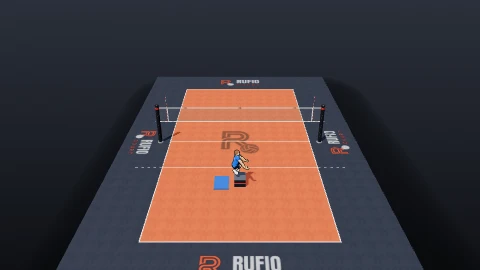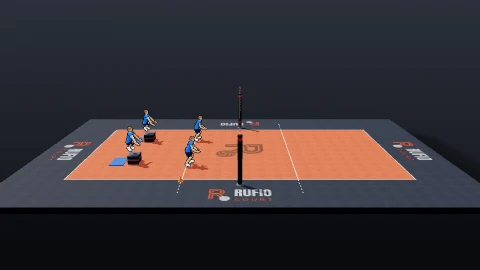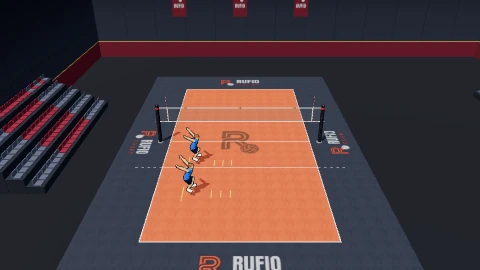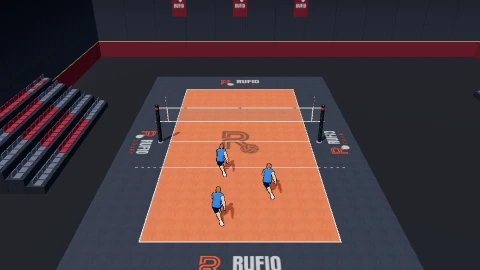
Approach jumps for height
Jumping drill for 1 to 6 players. Focus: approach rhythm; maximum reach.
What you need
- Players
- 1 to 6 players
- Time
- 5 to 8 min
- Level
- Intermediate
- Equipment
- None
- Ball fed by
- Not needed
- Space
- Half a court
Setup
- A line of hitters behind the attack line, near the middle of the court.
- Optional: a strip of tape on the antenna or a marked reach board to aim for.
- Walk back around the right of the line after landing, clear of the next hitter.
How it runs
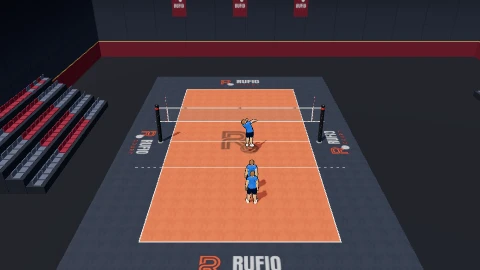
Hitters take a full approach from behind the attack line and jump for maximum reach at the net, with no ball. The focus is the footwork, the arm swing and the landing. Each hitter walks back around the outside to the end of the line.
Time and reps: 3 sets of 5 jumps, about 90 s rest between sets.
Coaching points
- Start slow and finish fast: the last two steps are the quickest and longest.
- Swing both arms back on the plant, then drive them up hard as you take off.
- Reach high with the hitting arm at the top of the jump.
- Land on both feet with soft knees, in balance, without touching the net.
Ways to change it
- Reach for a ball held up by the coach on a box.
- Use a two-step approach to work on the last two steps only.
- Note your highest reach in each set.
Terms on this page
- Attack line (10-foot line)
- The line about 10 feet (3 m) from the net. Back row players take off from behind it when they attack.
- Pin and antenna
- The pin is the end of the net where outside hitters attack, and the left pin is on your left as you face the net. The antenna is the striped rod above each sideline; the ball has to cross the net between the two.
- Approach
- The steps a hitter takes before jumping: a slow first step, then quicker steps into the jump.
Safety
Reps and rest times are suggestions, not medical advice. Check with an athletic trainer or doctor before plyometric work, especially with youth athletes, and stop if anything hurts.
- Keep the jump count low; quality drops quickly with fatigue.
- Land facing the net and away from the center line to avoid stepping on anyone.