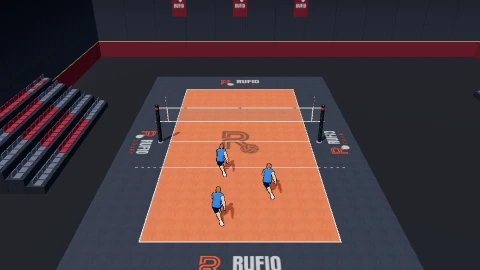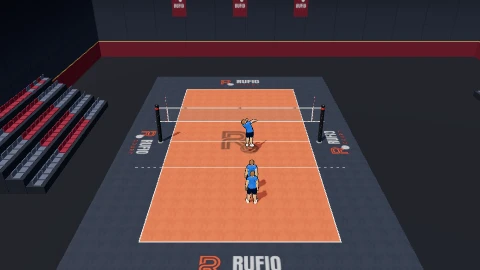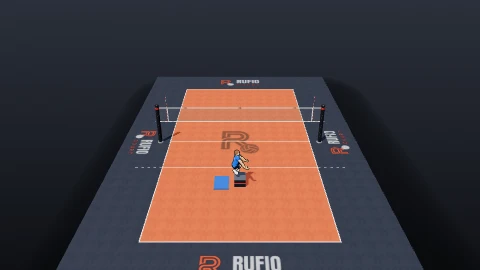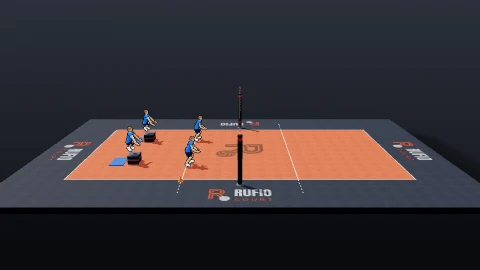
Broad jump and stick
Jumping drill for 1 to 8 players. Focus: landing control; horizontal power.
What you need
- Players
- 1 to 8 players
- Time
- 5 to 8 min
- Level
- Beginner
- Equipment
- Tape
- Ball fed by
- Not needed
- Space
- Half a court
Setup
- A start line of tape for each lane and distance marks every 50 cm (20 in) from about 1.5 m (5 ft) out.
- Lanes about 3 m (10 ft) apart; one athlete per lane.
- After each jump, hold the landing, then walk back to the start line.
How it runs
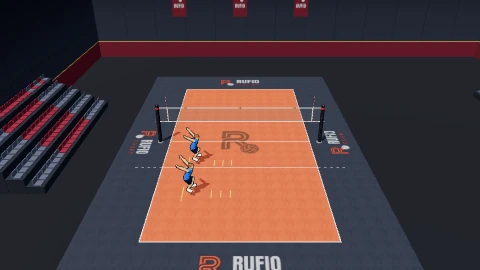
A standing long jump where the landing matters as much as the distance. Athletes swing the arms, jump forward off both feet, and stick the landing: feet planted, knees bent and still for two seconds before walking back. Tape marks show how far each jump went.
Time and reps: 3 sets of 4 jumps, about 60 s rest between sets.
Coaching points
- Swing the arms back as the hips sit back, then throw them forward as you jump.
- Land on both feet at once with the knees bent and tracking over the toes.
- Freeze the landing for two seconds: no extra steps, no wobble.
- Keep the chest up on landing.
Ways to change it
- Two or three jumps in a row with a stick at the end.
- Land on one leg for advanced athletes.
- Jump sideways for lateral power.
Make it easier or harder
Make it easier
- Jump a shorter distance and hold the landing for one second instead of two.
- Let a newer athlete start with a two-foot hop over a tape line.
Make it harder
- Move the tape mark farther out as the landings stay quiet.
Safety
Reps and rest times are suggestions, not medical advice. Check with an athletic trainer or doctor before plyometric work, especially with youth athletes, and stop if anything hurts.
- Jump on a dry, non-slip surface with plenty of run-off.
- Shorten the jump if the athlete cannot stick the landing.