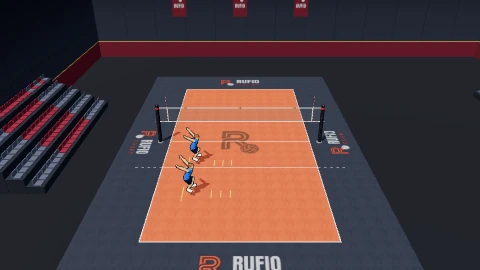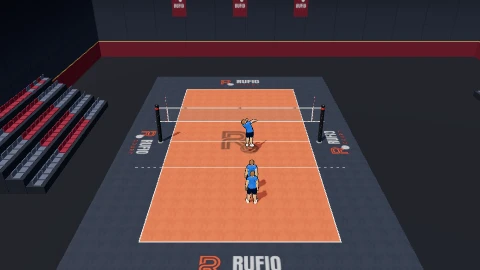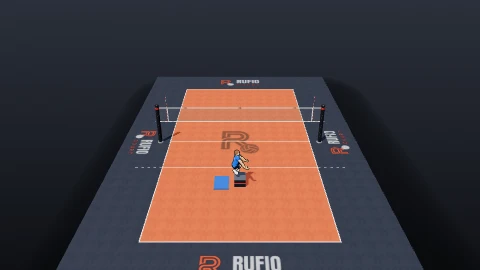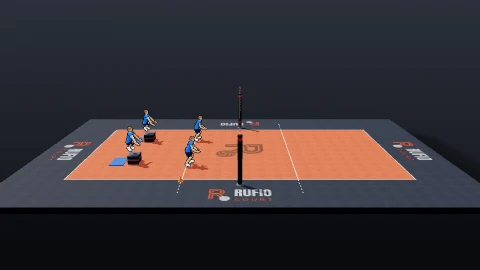
Skater jumps
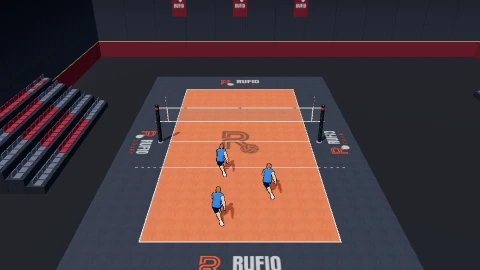
Jumping drill for 1 to 12 players. Focus: lateral power; single-leg balance.
What you need
- Players
- 1 to 12 players
- Time
- 3 to 5 min
- Level
- Beginner
- Equipment
- None
- Ball fed by
- Not needed
- Space
- Half a court
Setup
- No equipment: athletes spread out with about 2 m (7 ft) of clear space to each side.
- Start standing on the left leg, the right foot just off the floor behind.
- Work for 20 seconds, rest for 20.
How it runs
A side-to-side bound from one leg to the other, like a speed skater. Each landing is on a single leg, soft and balanced, held for a moment before bounding back. It builds the lateral push and landing control a defender needs to cover the court.
Time and reps: 4 rounds of 20 s work and 20 s rest, holding each landing for about a second.
Coaching points
- Push off the outside of the foot and bound sideways.
- Land softly on one leg with the knee bent and tracking over the toes.
- Hold each landing for a moment before bounding back.
- Swing the arms across the body for balance and keep the chest up.
Ways to change it
- Touch the floor beside the landing foot.
- Hold each landing for two seconds.
- Bound further once landings are steady.
Make it easier or harder
Make it easier
- Use small bounds and stop for a full second on each landing.
Make it harder
- Bound farther, or touch the floor with the opposite hand on each landing.
Safety
Reps and rest times are suggestions, not medical advice. Check with an athletic trainer or doctor before plyometric work, especially with youth athletes, and stop if anything hurts.
- Shorten the bound if the knee wobbles or caves inward on landing.
- Use a dry floor with plenty of side space.